
 The Price of Knowledge
By Sophie Lee
WRI 111: Writing Seminar
D.A. BROWN AWARD-WINNING ESSAY
Sophie received the D. A. Brown Award for this essay. The late D.A. Brown was a member of the English Department from 1941 to 1973. Noted for his high standards, a fund was established to recognize excellence in writing.
To read student-editor Brandi Bangle’s comments on the writing moves found in this essay, click on or hover over the footnotes within the text.
“Time for relaxation and introspection is lost in the chaos.” This is a line taken from the first draft of my ‘personal statement,’ a 650-word essay that gives college admissions officers an idea of who you are and what you stand for. Mine started out as a rant. 1 This matter-of-fact comment makes Sophie both honest and relatable. The first and only comment that Leslie, my college counselor, gave was “Sophie, this is great but it sounds like it would be better as an opinion piece in The Times.” 2 Sophie’s specific anecdote humorously increases her trustworthiness as an author. I wasn’t too surprised by this, and diligently started working another draft. It’s been sitting, abandoned, in my Google Drive folder for years, but the feelings that bubbled up and over onto the page then are still simmering now. 3 The descriptive imagery that Sophie uses brings life to her feelings. The sentiments that I typed out with a frantic vengeance – “because of the merit-based system and all the pressure it puts on students, we don’t have time to become introspective and mindful of ourselves, and are therefore struggling to write great college essays,” or “science classes are the only ones that are taught as if there is more to learn” 4 Sophie gives the reader insight into her thoughts by using real excepts from her personal statement. – are only slightly dulled by the passage of time. I was frustrated and tired. 5 The short length of this sentence puts great emphasis on Sophie’s feelings. Since then, I’ve learned that this exhaustion and frustration are not unfounded – that our education system is built in ways that don’t encourage students to derive joy from learning. This is a crime. Are we not meant to enjoy the pursuit of knowledge? 6 Sophie uses this rhetorical question to encourage the reader to begin thinking about this topic for themselves before she delves into the intricacies of her personal story.
Currently there is a systemic disconnect between curiosity and the pursuit of knowledge in our formal education system, especially in high school. The public high school that I attended created an environment where I felt pressured to pursue math and science classes, and where my whole education was building to the moment when I applied to colleges. This one-track path is not suitable for many students. Including me. 7 This sentence fragment moves this thought from general thought to
a specific case. Throughout high school, I yearned for a deeper meaning within my education and when I could not find it within myself, purpose was handed to me: do well, get into a good college, get a good job. 8 The word choice “handed to me” further emphasizes that this path was not one she chose on her own. These words like ‘well’ and ‘good’ are subjective; who has the authority to decide for everyone the life path to take? The freedom to deviate from this aforementioned path takes courage and time. It has taken me years to understand that my worth does not depend on the grades I make in my classes, my standardized test scores, or the acceptance rate of the university I attend. I still catch myself residing in the mindset that my grades and GPA are what mark and quantify my value as a human. This is not healthy. 9 By revealing that she still struggles with this unhealthy mindset, self-awareness is used to hand more credibility to Sophie as an author and encourage a greater connection with the reader. Instead, I am cultivating a learning experience fueled by my own curiosity. Requiring teachers to incorporate more hands-on learning into upper-level classes, as well as encouraging students to pursue a variety of life and career paths, will combat such uninspired and fatigued learning for all students.
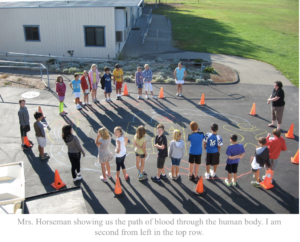
I have not always resented traditional schooling. I loved elementary school. I remember the first day of first grade, feeling so elated. It was the start of my friendship with my friend Carly, and it felt like the start of my 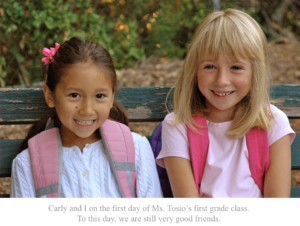 formal education. I remember sitting on a bench outside of our new classroom, waiting for the clock to strike 8:00 am so that our parents could leave and we could start the school day. My mind was filled with memories of kindergarten the year before – socializing, singing songs, painting and writing – and I was ready for more. Carly was already missing her parents, but I did not have time to mourn. There was a whole world to be discovered, and all I had to do was step through door A08. 10 Sophie uses specific details and the contrast of her friend Carly to illustrate fascination with learning that was present at a young age. This excitement continued throughout elementary school. I remember collaborating with my friends to paint a coyote brush mural – a lesson in art and native plants – that still hangs on the wall of the science room today. I remember walking through a sidewalk chalk depiction of the chambers of the human heart as if I were a blood cell. 11 These specific and descriptive examples breathe life into Sophie’s narrative. When we learned about gravitational forces, Mrs. Horseman, our science teacher, explained that each object has a gravitational force, even if you can’t feel it. “Even for example,” she lectured, “any two people in this class, say Abby and Jason, have a small gravitational pull towards each other.” Since Abby and Jason were spotted holding hands on the playground the week before, this incited lots of giggling. 12 This anecdote evokes feelings of childhood giddiness. School was exciting. The world seemed expansive and ready for my taking.
 Then I got to middle school. I still loved the material and my mind soared. Book clubs abounded; I raced through Algebra; we dipped roses in dry ice and smashed them during 6th period science class. 13 Sophie’s fast-paced use of language illustrates her excitement. Classroom learning was exciting, but it was in middle school, I believe, that my mind began to poke and prod the traditional boundaries of grade school. I began to realize that there is more to be learned than can be taught in a plaster and linoleum building. 14 The careful word choice of “poke and prod” helps to explain the process of Sophie’s transition in her thoughts about education, while the intentional writing of “plaster and linoleum building” helps to explain the nature of the constraints she began to feel. For almost all of seventh grade, I would stay up late into the night reading for fun. Inspired by the movies and thinking myself a rebel, I would hide a flashlight under my covers and while away the hours exploring the wizarding world with Harry, fighting for justice with Katniss, 15 Sophie provides a relatable detail from her childhood while incorporating much-loved stories the audience can connect with or breezing through any of the hundreds of books I could get my hands on. As I got older, I started finding knowledge for myself in all types of books, not just from the worksheets handed to me by my teachers.
This subtle tilt towards self-motivated curiosity in middle school snowballed into exhaustion and disillusionment with the traditional school system in high school. 16 Sophie uses the especially vibrant and active word choice of “subtle tilt towards self-motivated curiosity” and “snowballed into exhaustion and disillusionment,” which engages the reader. Every day I was tired and with each progressing year, I fell deeper and deeper into monotony. Wake up, walk to school, do homework, go to gym practice, sleep. Repeat. 17 This stand-alone word places emphasis on the monotony and exhaustion that Sophie experienced. The choices she has made about what to exclude gives this section a punchy feeling that hits the reader, making them realize that this is a tiring cycle. In spite of the routine, I took classes I found interesting such as architecture and physiology, I loved doing gymnastics, and I made great friends. One of my best friends, Emily, lived only a few blocks down the street from me and every day we would walk home from school together, discussing the daily high-school scandals. With each step, we came closer and closer to the looming pile of homework. The relentless August-in-California sun seemingly mocked the onslaught of assignments, tests, and quizzes on our horizon. 18 A sense of impending dread is created by making connections between the reality of the moment, which is walking in the sun, and school. This connection makes us feel anxious, as we are walking toward the pile of schoolwork, even while we’re in a different space.
“Mrs. Manning is giving us so many problem sets this week, I’m literally drowning in Calculus.” Of course, I wasn’t “literally drowning,” but I felt the tide pulling me under, my arms flailing for survival.
“Right? Do teachers even understand that we can’t spend like 3 hours a day on their class alone? Honestly, I don’t have time anymore to feel emotions.”
I don’t have time anymore to feel emotions. Emily’s words have stuck with me like a cotton t-shirt sticks to sweaty skin. 19 Sophie’s choice of simile is able to highlight the effect of Emily’s words by using sensory images that the reader can relate to. That day, like so many others, I was wrung out by the pressure to succeed and the pressure to learn what was handed to me. I was operating like an empty shell, existing only to go to school and learn. The books in my backpack weighed me down as I trudged home from school. 20 The word choices of “wrung out”, “empty shell” and “weighed me down” here paint a clear and powerful picture of Sophie’s experiences and feelings in these moments.
Since breaking through the clouds of these depressive high school days, 21 This metaphor marks a transition while still providing a sense of just how low the lows truly were. I’ve learned that this is called burnout. It is not me being “not smart enough” to keep up with the workload. Burnout is a “psychological syndrome resulting from chronic job stress” (Lee et al.) that can also be applied to school. In the context of post-secondary education, about one- third of all students experience burnout at least once (Williams et al., sec. Burnout), showing the widespread nature of this issue. In order to answer what sort of environment creates this stress and how to combat it, I called upon Carly. We have both grown and matured since first grade, and whenever we are together, we let our words paint the air between us with reflections and half-baked thoughts and new ideas. 22 Again, Sophie uses metaphor and descriptive language to intrigue the reader. During this one particular conversation, Carly mentioned what she called the “culture of comparison” in our high school. Personally, I can remember many moments when I myself asked a friend, “What did you get on the test?” or when classmates shared their GPA openly. Carly remembers how her AP Physics teacher would pass out tests in order of test score. 23 Personal anecdotes provide strong examples for Sophie’s realizations and conclusions. It was always abundantly clear who was scoring high and doing “well.” This culture of comparison, we both agreed, is detrimental to everyone’s mental health. Remedying this harmful behavior would mean that each student becomes more focused on their own academic journey, turning to internal motivation as opposed to outside pressure. Carly astutely summed up our high school experience by saying, “If there’s not pressure on you, if you’re not stressed, then you’re not doing high school right, and that’s wrong.” If that statement is not indicative of a broken learning environment, I don’t know what is. 24 Sophie uses this sentence structure as a persuasive tool by suggesting there is no alternative, i.e., there’s no denying the broken learning system.
My research and reflection have led me to question why I and other students put ourselves through this psychological distress. What are the long-term rewards? These are not rhetorical questions. The answer is college, followed by a well-paying job. There is no doubt that the emphasis on a well-paying job is somewhat justified. After all, who doesn’t dream of a nice house and the occasional island vacation? 25 Sophie answers her own rhetorical questions by directly addressing the realities of life, garnering her further reliability as an author. But this can’t be the end-all be-all. There has to be more to life. 26 These short sentences mark conclusions Sophie has come to, which are also challenges to the norm. Curiosity and creativity are lost in this brick-paved life path that leads to a nice brick and mortar house. 27 Powerful imagery is used to make a deeply meaningful conclusion. There is a certain beauty in the things that cannot be quantified by formal education. It is difficult but necessary to encourage students, especially high school students, to be curious and think critically outside the box of required classes. The weight and monotonous routine of study guides and mandated textbooks crush the spirits of students who yearn for creative and inspiring teaching. Where has the joy in learning escaped to, and how can we bring it back? 28 Sophie challenges her readers to both question the current reality and to imagine a new one.
Recently, my mom told me that I needed to think more. This wasn’t a subtle dig at my intelligence or capabilities. Instead, she was worried that I was spending too much time studying and not enough time thinking. 29 Sophie delays revealing what her mom meant by “think more.” This move causes the reader to consider the information more deeply when it finally becomes clear. The truth of the matter lies somewhere between these two kinds of intellectualism. She likened it to Newton, who famously sat, observed, and let his curiosities guide him to discovering groundbreaking theories that revolutionized the fields of Physics and Calculus. She was suggesting, then, that I go outside with no phone, no book, and just sit and think. I immediately took to the idea. A time to be mindful. A time to be curious without the pressure of being studious. Finally! 30 These sentence fragments invite the reader to follow along on this joyous train of thought. It seemed like an avenue down which I could find and rescue the joy of thinking and learning. Despite the grandeur of this idea, I have yet to let the sun warm my back while I slowly become awakened to the beauty of the world and the intricacies of my mind. Why? Because of all the other “thinking” that I’ve been doing: completing homework and studying for my college classes.
By the time my future kids are college-aged, the cost of attendance of a 4-year private college education is projected to cost just shy of $400,000. 31 This evidence is introduced in a way that is relevant to the narrative, which aids in keeping coherence throughout the essay. Whether or not this will end up being true, between the 2006 and 2016 school years, the price of higher education increased 24-31% after adjusting for inflation (National Center for Education Statistics). This begs into question the real value of a higher education degree. If the cost of attendance of the same quality of education is less than $300,000 today, where does that extra $100,000 increase originate? Is it arbitrary, since inflation cannot possibly jump 33% in that many years? But does the value of education really lie in the numerical price tag that we give it? What is lost when quantifying the multiplicitous experiences of higher education and learning? 32 Rhetorical questions are once again used to encourage the reader to think deeply and to challenge what has typically been accepted.
This is a problem that I have encountered at all stages of my formal education, though especially in high school. Whenever there is an opportunity to quantify, measure, and compare learning (and there are lots), 33 This small note emphasizes how much schools try to quantify learning, as well as suggesting Sophie’s feelings about the matter in a conversational way, which makes the piece seem more human and relatable. the more ethereal things like curiosity and creativity get shunted to the side. One infamous way of quantifying and comparing intellect are college entrance exams. Results of the SAT and ACT tests are  constantly criticized, for good reason, for being dependent on outside factors like family income brackets. With a larger disposable income, families can pay for test preparation courses, multiple testing dates, or even, as was the case in the recent college admissions scandal, for someone else to take the test in place of the student. 34 Multiple examples, including relevant news, are brought in to further the main idea of the essay. To show the real difference, I pulled statistics from the National Center for Education Statistics, a government funded organization that studies the nature and quality of education in the U.S. As you can see, with greater family income, a student’s test scores increase. This is a great injustice to those in our society who have already lower levels of wealth and opportunity. It is also a great injustice to the process of learning. By giving a price tag to the quality of education, whether through paying for standardized test preparation or through higher education tuition, the original mission of education – curiosity and critical thinking – is are partially obscured. In this way, education is a good, like any other, that is bought and sold on the free market with irreverence.
Despite my disgust with the current education system and my own experiences with burnout, it is necessary to note that I have benefitted from the system that is in place. 35 This self-awareness allows the reader to further trust Sophie. My mind is prepared to work hard within the constraints of standardized tests and formal education. My parents are financially equipped to play the system: 36 This phrase encapsulates Sophie’s feelings as a harsh reality they paid for my ACT preparation classes, math tutoring, college essay review, all the application fees, and my tuition. Being able to attend a prestigious university and having gone to one of the top 5 public high schools in my state is a privilege. I’ve taken high level math and physics courses and a summer ACT prep course. Both my family’s socioeconomic position and my own natural capabilities for formal education are the very instruments through which I have been able to see these issues. 37 This acknowledgement again creates greater credibility. Despite these benefits, my soul still yearns for more. It is not enough for me to “succeed” on the ACT, or to get good grades. Though I am truly interested in French and Philosophy and the other classes I am currently taking in college, it is only surface-level. I crave curiosity and the only forces in my life that encourage me to explore outside of formal education are myself and a few select mentors. This is not enough. All students should be supported in pursuing their curiosities. Disappointingly, our education system does not adequately introduce these revolutionary concepts of curiosity and creativity. 38 Sophie’s word choice reveals a sarcastic tone which embodies her feelings toward the matter.
So how can we infuse curiosity into classrooms nationwide? How can we emulate the child-like wonder of elementary school in the realistic context of high school and higher education? Again, these are not rhetorical questions. In talking to my friend Emily about this issue, we came up with an answer: do more hands-on learning. In elementary school we’re walking through models of the human heart, in high school we’re scribbling down black and white diagrams of the heart’s atria and ventricles onto graph paper notes. 39 The two examples combined in one sentence effectively contrast each other to exemplify just how different elementary school and high school learning are. It invites the reader to imagine what the effects of each style of learning would be. We need to show students that the material they are reading about in textbooks and listening to in lectures have vibrant real-world applications. In her book No Citizen Left Behind, middle school teacher Meira Levinson shows that a hands-on curriculum – including trips to the local garden and city courthouse – creates life-long curious learners. Additionally, in making students aware of burnout and providing more mental-health resources at the high school level, students will be more prepared to deal with stress, leaving more time in their schedules to cultivate curiosity. Carly believes that inspired teachers who care deeply about their subject will pass on their curiosity and self-motivation for learning to their students. I think that change starts with one person. An overhaul of the entire education system is an insurmountable task, but encouraging individual students and educators to get down and dirty and creative with their course material is achievable and necessary.40 Another well-crafted argument proves Sophie is not naive, but that she does wishes–and believes it is necessary–to challenge the status quo.
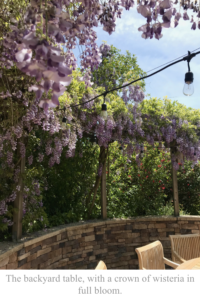
During the summer – that blessed period of warm skies and no homework 41 This small description invites readers to connect with the essay in its relatability, as this is an experience most students can identify with. – I used to lie down on my backyard table and look at the great expanse of blue above me. My parents would question, “Why are you lying on the hardwood table and not the grass? Surely the lawn is more comfortable?” It would have been, and on many occasions I did unroll a blanket and let the grass tickle my toes. But I liked sitting on top of the table because it was a small act of defiance. It was “you can’t tell me what to do;” it was “I’m calling the shots.” It was hiding under the covers with a flashlight. 42 Sophie’s repetition of this detail brings her conclusion to a full-circle moment. It was freedom. During those moments, I felt like Janie. In one of the initial scenes of Zora Neale Hurston’s novel Their Eyes Were Watching God, the main character, Janie, lies underneath a pear tree and likens herself to the blossoms she sees growing there, just beginning to show their dappled pink to the world. In my mind, she is forever “stretched on her back beneath the pear tree soaking in the alto chant of the visiting bees, the gold of the sun and the panting breath of the breeze” (Hurston 2). Lying there on the table, with whispers of wisteria waving in and out of my field of vision, I would look at the clouds. I would think. This was the kind of thinking that my mom is encouraging me to do. It was pondering. It was curiosity. This is freedom. 43 These short sentences end Sophie’s essay on a powerful, defiant note by describing her ideals of education.
Works Cited
Hurston, Zora Neale. Their Eyes Were Watching God. J. B. Lippincott & Co., 1937.
Lee, Jayoung, et al. “Age-Related Differences in Academic Burnout of Korean Adolescents.” Psychology in the Schools, vol. 50, no. 10, Psychology in the Schools, Dec. 2013, pp. 1015–31.
Levinson, Meira. No Citizen Left Behind. Harvard University Press, 2012.
The NCES Fast Facts Tool Provides Quick Answers to Many Education Questions (National Center for Education Statistics). National Center for Education Statistics. nces.ed.gov, https://nces.ed.gov/fastfacts/display.asp?id=76.
Snyder, T.D., and Dillow, S.A. Digest of Education Statistics 2012 (NCES 2014-015). National Center for Education Statistics, Institute of Education Sciences, U.S. Department of Education. Washington, DC., 2013.
Williams, Cameron John, et al. “More Pain than Gain: Effort-Reward Imbalance, Burnout, and Withdrawal Intentions within a University Student Population.” Journal of Educational Psychology, vol. 110, no. 3, Journal of Educational Psychology. http://go.libproxy.wakehealth.edu/login?url=http://search.ebscohost.com/login.aspx?direct=true&db=eric&AN=EJ1175944&site=ehost-live.
A Word from Sophie
 When you read my writing, you get to know me. I have thought a lot about what it means to be me, especially in the past year or so since coming to college. Who I am, who I was, and who I want to be. This introspection, particularly how these feelings manifest in writing, is something that Professor Whitehead has always encouraged me to do. My time in WRI III, as well as my time in other English and Creative Writing courses, has helped me cultivate my voice on the page and my own self in the world.
All of my writing is deeply personal – my brain constructs sentences, swapping out words and phrases, my fingers drag across the page or the keyboard – and in the end, every single word I write is mine. But I could not have done this alone. This essay bloomed from deep-seated feelings of exhaustion and resentment that helped me formalize my complaint with formal education, and only through many peer and mentor review sessions, as well as phone calls with my friends and parents, did these feelings come together to form cohesive words and sentences. These inter- and intra-personal interactions are central to my essay. My essay does not and cannot exist on its own, same as any other story. Instead, my story exists in the created space between author and reader. All stories are conversations between the artist and others, which is why we laugh when our friends tell stories and why we cry at movies.
I have shared a part of me with you, you who have read this essay. My hope is that you have learned something about me, about yourself, and the world around us. What stories blossom from your relationship to the world? What conversations will you have with your readers? I hope that the tales you tell come from the deepest part of yourself and flow through your heart, mind, and make your fingers dance across the page.
From Professor Elisabeth Whitehead
Commentary
There is so much to love in this essay. But perhaps what I appreciate most is the way Sophie’s approach to the essay enacts the content of the argument. As Sophie is advocating the importance of infusing more creativity and curiosity within our educational system, we watch (and join her) on her journey of exploration of the topic. She allows her questioning, her yearning, and her inquisitiveness to direct the movement of the essay. She discovers along the way and allows us to participate in that discovery as well. One way she achieves this is in her choice of structure. The essay unfolds, rolls, wonders, and wanders too. But the organization never feels arbitrary. It leads a reader deftly, though the structure is not transparent. The ease of the essay’s movement belies the attention Sophie took in her revisions. To achieve this feeling of effortlessness in the writing, Sophie took great care in her editing process.
Another way Sophie creates an experience for us as readers is in her use of voice. There is a more casual or accessible quality to it. She asks herself (and us) questions. She is honest about her frustrations. She reveals her inner life. She includes believable dialogue between friends. And though she invites us into her experience with the naturalness of her voice, the writing is also extremely polished and concise. This is a difficult balance to achieve.
And finally, I must mention the lovely ending. Again, Sophie enacts the spirit of the essay and shows us the effects of slowing down, of taking the time to think and ponder, as she looks up into the draping blossoms of a wisteria tree on a slow summer afternoon. She achieves this through the beauty of her language and reflections, and by including her own internal thoughts, photography, and Hurston’s words. The melding of these elements shows the larger effects of mindfulness, curiosity, and creativity.
Assignment
Essay 4: Narrative Advocacy
For your fourth paper, develop an argument built on the foundation of personal narrative on an issue of concern to you.
Narrative arguments make it possible for writers to illustrate a point by appealing to their audience, invoking experience, and creating a sense of identification with the controversy at hand. Key to creating an effective narrative argument is establishing credibility (your audience must believe you and trust your presentation) and establishing representativeness (the audience needs to understand that your narrative reflects a larger problem beyond the scope of its events).
Choose a subject that is tightly focused. You will want to keep your work balanced rhetorically by accompanying the emotional appeal of your story with strong credibility and with logical evidence (both anecdotal and researched) to support your claims.
Think in terms of an experience that made you realize that something was wrong or that something needed to be changed, and from which you gained essential knowledge about yourself and about the workings of the world around you. Tell a story that allows you to establish your position on the controversy and provide support for your claims. A well-told story often engages in vivid description. Create presence in your details. Your readers should really feel that they too, by reading your account, are there beside you, and can hear, see, smell, and touch those surroundings. Clean and vivid details can help set scene and tone. Therefore, be specific, descriptive, and engaging.
Successful papers will provide a rhetorically balanced narrative argument and will be clearly and engagingly written. You should conduct enough research to provide relevant, external support for your position. Your paper should include at least three sources (books, magazines, journals, newspapers, interviews, films, and/or texts from the academic databases), but use as many sources as you need.
Editor Comments
- 1This matter-of-fact comment makes Sophie both honest and relatable. ↩︎
- 2Sophie’s specific anecdote humorously increases her trustworthiness as an author. ↩︎
- 3The descriptive imagery that Sophie uses brings life to her feelings. ↩︎
- 4Sophie gives the reader insight into her thoughts by using real excepts from her personal statement. ↩︎
- 5The short length of this sentence puts great emphasis on Sophie’s feelings. ↩︎
- 6Sophie uses this rhetorical question to encourage the reader to begin thinking about this topic for themselves before she delves into the intricacies of her personal story. ↩︎
- 7This sentence fragment moves this thought from general thought to
a specific case. ↩︎ - 8The word choice “handed to me” further emphasizes that this path was not one she chose on her own. ↩︎
- 9By revealing that she still struggles with this unhealthy mindset, self-awareness is used to hand more credibility to Sophie as an author and encourage a greater connection with the reader. ↩︎
- 10Sophie uses specific details and the contrast of her friend Carly to illustrate fascination with learning that was present at a young age. ↩︎
- 11These specific and descriptive examples breathe life into Sophie’s narrative. ↩︎
- 12This anecdote evokes feelings of childhood giddiness. ↩︎
- 13Sophie’s fast-paced use of language illustrates her excitement. ↩︎
- 14The careful word choice of “poke and prod” helps to explain the process of Sophie’s transition in her thoughts about education, while the intentional writing of “plaster and linoleum building” helps to explain the nature of the constraints she began to feel. ↩︎
- 15Sophie provides a relatable detail from her childhood while incorporating much-loved stories the audience can connect with ↩︎
- 16Sophie uses the especially vibrant and active word choice of “subtle tilt towards self-motivated curiosity” and “snowballed into exhaustion and disillusionment,” which engages the reader. ↩︎
- 17This stand-alone word places emphasis on the monotony and exhaustion that Sophie experienced. The choices she has made about what to exclude gives this section a punchy feeling that hits the reader, making them realize that this is a tiring cycle. ↩︎
- 18A sense of impending dread is created by making connections between the reality of the moment, which is walking in the sun, and school. This connection makes us feel anxious, as we are walking toward the pile of schoolwork, even while we’re in a different space. ↩︎
- 19Sophie’s choice of simile is able to highlight the effect of Emily’s words by using sensory images that the reader can relate to. ↩︎
- 20The word choices of “wrung out”, “empty shell” and “weighed me down” here paint a clear and powerful picture of Sophie’s experiences and feelings in these moments. ↩︎
- 21This metaphor marks a transition while still providing a sense of just how low the lows truly were. ↩︎
- 22Again, Sophie uses metaphor and descriptive language to intrigue the reader. ↩︎
- 23Personal anecdotes provide strong examples for Sophie’s realizations and conclusions. ↩︎
- 24Sophie uses this sentence structure as a persuasive tool by suggesting there is no alternative, i.e., there’s no denying the broken learning system. ↩︎
- 25Sophie answers her own rhetorical questions by directly addressing the realities of life, garnering her further reliability as an author. ↩︎
- 26These short sentences mark conclusions Sophie has come to, which are also challenges to the norm. ↩︎
- 27Powerful imagery is used to make a deeply meaningful conclusion. ↩︎
- 28Sophie challenges her readers to both question the current reality and to imagine a new one. ↩︎
- 29Sophie delays revealing what her mom meant by “think more.” This move causes the reader to consider the information more deeply when it finally becomes clear. ↩︎
- 30These sentence fragments invite the reader to follow along on this joyous train of thought. ↩︎
- 31This evidence is introduced in a way that is relevant to the narrative, which aids in keeping coherence throughout the essay. ↩︎
- 32Rhetorical questions are once again used to encourage the reader to think deeply and to challenge what has typically been accepted. ↩︎
- 33This small note emphasizes how much schools try to quantify learning, as well as suggesting Sophie’s feelings about the matter in a conversational way, which makes the piece seem more human and relatable. ↩︎
- 34Multiple examples, including relevant news, are brought in to further the main idea of the essay. ↩︎
- 35This self-awareness allows the reader to further trust Sophie. ↩︎
- 36This phrase encapsulates Sophie’s feelings as a harsh reality ↩︎
- 37This acknowledgement again creates greater credibility. ↩︎
- 38Sophie’s word choice reveals a sarcastic tone which embodies her feelings toward the matter. ↩︎
- 39The two examples combined in one sentence effectively contrast each other to exemplify just how different elementary school and high school learning are. It invites the reader to imagine what the effects of each style of learning would be. ↩︎
- 40Another well-crafted argument proves Sophie is not naive, but that she does wishes–and believes it is necessary–to challenge the status quo. ↩︎
- 41This small description invites readers to connect with the essay in its relatability, as this is an experience most students can identify with. ↩︎
- 42Sophie’s repetition of this detail brings her conclusion to a full-circle moment. ↩︎
- 43These short sentences end Sophie’s essay on a powerful, defiant note by describing her ideals of education. ↩︎