

Dos Hogares, One Mind
By Kelsey Flores
Writing 111: Writing Seminar
De dónde eres? This simple question my relatives often posed throughout my childhood somehow always left me perplexed. How could I explain that in my mind, I resided in two worlds? The past nineteen years of my life have consisted of shifts between Charlotte and Mexico, between Spanish and English. Until I began preschool, I grew up listening to the fast-paced melody that is Spanish, only interrupted by the rigid sounds of the English language. The two remained separate until I was twelve, a rule enforced by my parents in hopes that I would retain both languages. Nevertheless, my Mexican and American identity fused until they were inseparable, interwoven like threads on a tapestry.
In Richard Rodriguez’s memoir, “Aria: A Memoir of a Bilingual Child,” Rodriguez conveys his sense of identity through the idea of language as comfort and authority. In his memoir, Rodriguez argues against bilingual education by recounting how learning English provided him a sense of belonging and a public identity. Rodriguez develops a sense of social belonging by mastering the English language; however, he reveals that his new identity overshadows the relationship between Spanish and his private family life. Rodriguez, the child of Mexican immigrants living in a predominately white neighborhood, expresses his private and public life as conflicting. As a young child, Rodriguez must choose a single identity in order to gain acceptance into his community. Rodriguez regards his Mexican-American identity as two separate entities; however, I embrace my two distinct cultures, which reconcile themselves in me as one identity that allows me to reside in two worlds.
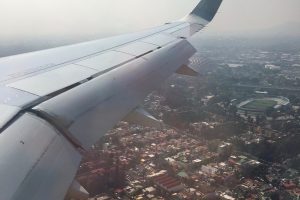
For the last nineteen years, I have often found myself at the airport, waiting to depart or receive someone. My life consists of constant travel, not only between places, but between cultures and language. The moment we step foot in la Ciudad de Mexico, my sisters and I shift into Spanish. We understand that to be able to communicate with our family effectively would bring us closer together. The same shift would occur as we landed in Charlotte-Douglas airport, where we could freely speak English without the feeling that we were isolating ourselves from our family. Yet, no matter where I was, that dreaded question would always arise; de dónde eres? Where are you from? As a child, I would usually answer the name of the place I was visiting. I could be from Toluca, then Oaxaca, then Charlotte. However, it always seemed unnatural to me that I had to choose one. In reality, I carry a piece of place with me at all times. This blend of cultures and languages manifests itself in every family reunion. At Thanksgiving, I can hear jokes in Spanish among the murmur of English around the dinner table. Before me on the table is a plate piled high with tamales, made by my aunt according to the custom in Toluca. Next to that is the ham and turkey my mom has spent all day preparing. The very act of celebrating Thanksgiving is an American influence on my family, yet the way we celebrate makes it unique to our culture. As we go around the table saying what we are thankful for, our family shares in a mix of two languages, so that we may be able to fully communicate our gratitude. In his memoir, Rodriguez argues that Spanish was the language that made him feel close to his family, yet that changed as he took upon a new, public identity characterized by English. Through Spanish, Rodriguez experienced a sense of intimacy and belonging with his family, but that sense of intimacy became scarce as his family spoke more English. While Rodriguez was forced to separate his identities, I was forced to fuse my identity in order to fully engage in my world. In my experience, embracing both cultures simultaneously has allowed me to have a more close, intimate relationship with my family.
Throughout the years, my blended identity manifests itself in the way I communicate and exist in my two worlds. My parents, originally from Mexico, moved to the United States at a young age, and battled against the language barrier. Yet, their determination allowed them to prevail, and they emerged with knowledge of a new culture and language. However, the longer they made America their home, the more they grasped onto the language and culture of their original homes. In my experience, my parents encouraged the use of Spanish at home, while Rodriguez’s parents emphasized the need for their children to practice English. As I grew older, my parent’s fear that my Spanish would fade away ceased, and they allowed me to communicate with them in English. This new freedom allowed me to reside in my two words simultaneously. My mind constantly switches between thoughts and emotions in Spanish and in English, which I could channel through the use of Spanglish. As I string together a vast array of English adjectives with complex Spanish verb tenses, I can express my thoughts without the restraints of one language. However, Rodriguez reveals that he can never fully express himself in both languages without feeling as if he were missing something. As a child, he gains acceptance into his community through the use of language, yet his inability to communicate with relatives in fluent Spanish shields him from his family life. Bilingualism allows me to communicate in a deeper way with my community and family.
As a student, my bilingualism allows me to engage into a deeper conversation with my community at large. I view my blended identity as a great responsibility, not only to myself so that I may remain true to my traditions, but also to all people who share my background. My parents have influenced my values by instilling in me the desire to aspire to something greater, yet remain true to my identity. To be bilingual means that I can walk into a patient’s room, as a volunteer and an aspiring doctor, with confidence that I will be of help. It means that I can sit and listen to patients’ stories and empathize with them through the language that we share. This ability to reside in two worlds allows me to communicate to the English-speaking doctor sitting on my right everything the patient is experiencing, whether it be symptoms or emotions. On the other hand, Rodriguez connected to his community, from neighborhood children to his teachers, by embracing English, which he once viewed as a language that did not belong to him. The more he connected to his community in English, the less Rodriguez spoke to his parents in Spanish as he began to lose command of the language. Nevertheless, bilingualism enables me to transcend the language barrier as a medium through which two worlds can come together. There is nothing lacking; in fact, I believe my bilingualism fills in any crack of doubt or misunderstanding. Growing up bilingual grants one a great responsibility, that of maintaining both languages so that one may bridge the gap between languages and worlds.
As I go through life, I often think of what I represent. The stickers on my laptop are a testament to the fact that I want to embrace my blended identity. The sticker depicting the skyline of Charlotte reminds me of my physical home, yet the colorful papel picado banner above it reminds me of the joy my Mexican heritage brings to my life and that I should celebrate my culture. Both symbols of my identity are out in the open, for all to gaze upon. Throughout his work, Rodriguez feels conflicted as he tries to choose an identity to embody in order to gain acceptance. Today, there seems to be tension between cultures.
Assumptions are made easily based on mere physical appearance. Yet, these shortcuts prevent people from engaging in a deeper conversation with one another about what they truly represent. Rodriguez’s search for a public identity, for public acceptance, translates into a lack of pride in his Mexican-American heritage in the eyes of his extended family and family friends. They labeled him as pocho, and in doing so they shame him for forgetting his native language. However, I believe that taking pride in my Mexican- American heritage has allowed me to answer that difficult question, de dónde soy? Yo soy de Toluca, yo soy de Oaxaca, and I am from Charlotte. I cannot choose between my Mexican culture and my American life simply because there is not choice. I am a blend of the two. No matter how distinct my two worlds are, they reconcile themselves in me. As I continue forward, I will constantly seek to engage in a deeper conversation with those around me, forever learning about my blended identity in hopes of fulfilling the responsibility of accommodating two worlds.
Works Cited
Rodriguez, Richard. “Aria: A Memoir of a Bilingual Childhood.” The American Scholar, vol. 50, no. 1, 1981, pp. 25–42. JSTOR, www.jstor.org/stable/41210690.
A word from Kelsey
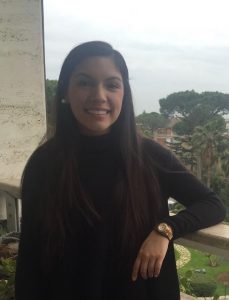
Before coming to Wake Forest, I hid behind excessive quotes and broad claims about mankind in my writing. However, my first writing assignment for WRI 111, a personal narrative, encouraged me to use personal evidence in order to add to a conversation about home. In high school, I was so accustomed to using language from texts as my evidence to support my thesis. While writing this essay, I had a difficult time communicating my blended identity because it is something so fundamental to me. With the help of Professor Giovanelli, I learned the power of specific evidence, particularly personal evidence. Most importantly, I have learned to let my humanity come through in my writing. I learned not to hide my identity, but to embrace it and learn from it. My essay, “Dos Hogares, One Mind,” made me reflect on myself as a person and how I fit in to this grand world. It reminded me of my purpose in life, which is to serve others. If anything, this essay motivated me to continue learning and being compassionate. As I read Rodriguez’s memoir, I often found myself thinking about my parents and how they overcame the language barrier. Writing about home has renewed in me a sense of gratitude and self-awareness that is easy to lose in such a busy, loud world. Writing is such a powerful tool, and I intend to use it to delve deep into my experiences, now and in the future, so that I may be constantly evolving and changing as a human and a writer.
From Professor Laura Giovanelli
Assignment
Click here for a pdf of Kelsey’s assignment.
Professor Commentary
I remember the afternoon Kelsey Flores visited me in my office, wanting to talk about her first writing project for our class. Our assignment was to summarize and respond to one of three published essays loosely based on our class theme of home and identity. I assign a summary and response project early in the semester for WRI 111 students because, as they transition from high school writing, I want to build on familiar skills they usually bring from high school—careful, thoughtful listening of summarizing another writer’s argument—with the often newer challenge of having something to say that comes from themselves. I’m not asking my students to demystify any symbolism, or to argue about any literary themes or devices. Rather, I’m asking them to listen and then add something new—something of them—to a conversation, taking it to newer, more relevant place. Sometimes that includes external sources, such as a popular news article that clarifies a counterpoint or current events. But more often, it includes personal experience. Always, I’m looking for precise, nuanced detail over broad claims and generalizations.
Kelsey concisely and accurately summarized Richard Rodriguez’s 1981 personal essay, “Aria: Memoir of a Bilingual Childhood,” critiquing bilingual education with his conflicted experience growing up in California as a Mexican-American. But she was concerned about what—if anything—she had to say in response. She was stuck; she didn’t even know where to start.
For many students, having something to say that comes from them alone is new territory. For it to really work—for a response to resonate with readers—it needs to say something specific, something so precise that we as readers really live in their words, but also universal enough builds understanding.
When Kelsey and I talked that first time, I asked her to think about invention writing we had done in and out of class to brainstorm writing about her response to Rodriguez’s argument about his identity and her own. Spotting the stickers on her laptop—a garland of Mexican party flags, a silhouette of the Charlotte skyline—I asked her about her background, and after she told me more, I wondered out loud if this public declaration of her identity and story might be the beginning of her response.
You can read the seeds and the growth of those initial ideas in Kelsey’s final draft of “Dos Hogares, One Mind” where she writes with care, precision, and humanity about her dual identity as a young Mexican-American woman living in North Carolina in 2018, an age when we as a country are asking questions and raising concerns about who belongs to be where and how our government makes those decisions; how our laws are enacted now by presidential policy and how they might be more just. Kelsey’s response essay writing makes me think of the millions of Dreamers waiting in limbo for some kind of resolution to their futures, and now, later in 2018, as I re-read her words, of the thousands of children separated from their parents on the U.S. southern border, migrants caught between who they were, who they are, and who they will be.
“I cannot choose between my Mexican culture and my American life simply because there is not choice,” Kelsey writes. “I am a blend of the two. No matter how distinct my two worlds are, they reconcile themselves in me.” By responding with her own story, Kelsey is part of our national conversation, a young person split and supported by two countries and cultures, shifting between Rodriguez’s argument and her own, listening and building on and making new a discussion more relevant than ever right now.