


YOU CAN’T GO HOME AGAIN: The Autoethnography of a Young Woman Detached from Her Rural Appalachian Home
By Cassie Ball
Writing 111: Writing Seminar
D.A. BROWN AWARD-WINNING ESSAY
Cassie received the D. A Brown Award for a longer version of this essay. The late D.A. Brown was a member of the English Department from 1941 to 1973. Noted for his high standards, a fund was established to recognize excellence in writing, specifically at the Writing 111 level.
The Chance
Life chances, according to anthropologist Kenneth Guest (2016), are defined as “an individual’s opportunities to improve quality of life and achieve life goals” (p. 272). A concept that Max Weber, a twentieth-century anthropologist, first developed as he studied class divides in western Europe’s Industrial Age, life chances often dictate a person’s likelihood of obtaining a higher socioeconomic status than the one in which he or she is born (Guest, 2016). As I learned of life chances in my cultural anthropology class during my first semester at Wake Forest University, I immediately thought of my own life chances while growing up in the Appalachian Mountains of southern West Virginia. In accordance with Weber’s definition, my own life chances are seemingly equivalent to those of most young women with whom I grew up. However, I received a unique chance—to study at Wake Forest University, a school nationally recognized for its high-quality academics and selectivity. Attending school here is an opportunity that many young women from rural Appalachia do not imagine for themselves.
Yet, in having this opportunity, I notice that I face an unforeseen struggle—that of my identity. As a young woman from southern Appalachia attending an elite private school, I often feel an uncomfortable disconnect from my family and home community. My own experience is only one of the many that young women face as they surpass their original socioeconomic backgrounds. Because the United States prides itself on having no class limitations—emphasizing the “American dream” that anyone from any background can rise to any position—American discourse often ignores this personal conflict that accompanies social mobility. The conflict, nevertheless, is real. Christine Walley (2013), professor of anthropology at MIT, is herself a woman who has battled such inward confusion through her rise in socioeconomic status. In high school, she received a scholarship to attend an elite private school on the East Coast, an experience that drastically challenged her identity as a young woman from the industrialized, working-class community of the steel mills in Southeast Chicago. Describing this experience in her autoethnography Exit Zero (2013), Walley notes how difficult it is for her to discuss her social mobility as a white, working-class girl because of mainstream America’s tendency to attribute its socioeconomic differences strictly to gender or race differences, ignoring the class divides that exist regardless of these variables. Women like Walley and myself feel the impact of America’s class divides in our positions within America’s higher education system. From my own experiences and research, I hope to show how the overlooked negatives of upward social mobility affect one’s identity. My own identity is in conflict between my roles at home and as a student at Wake Forest, between the vastly different worlds of a white, working-class, industrialized region fixated on the past and the wealthy status of a university that prioritizes diversity, intellect, and the desire to progress into the future.
The Culture
Mountain fog, winding rivers, bluegrass music, coal mines, rusty railroads, and family: the unique culture of the Appalachian Mountains is one with which I will never completely part. Indeed, studies such as Health Disparities Between Appalachian and Non-Appalachian Counties in Virginia have noted the region and its cultural peculiarity (McGarvey et al., 2011). Early European settlers, from countries such as Scotland, Ireland, England, and Wales, brought to the Appalachian region values such as strong family and community ties, belief in God and the supernatural, loyalty, and work-ethic (McGarvey et al., 2011). These values are inherent in my family and myself. For example, my father’s family places a powerful emphasis on the children’s responsibility to care for their parents. My grandmother, diagnosed with cancer this past year, has relied on my father to drive her three hours to every doctor’s appointment and chemotherapy treatment at a hospital in the northern part of West Virginia. He has selflessly sacrificed his own comfort and plans to be near his mother to ensure that, first and foremost, he provides for her.
I feel such responsibility even now for my own parents, though more so for their emotional health than their physical health. When my grandmother had to endure an intense surgery to remove part of her cancer two weeks after I had arrived at Wake, I remember calling my father to encourage him. While I worried for my grandmother, I worried even more for the emotional state of my father as he anxiously waited all day while my grandmother was in her surgery. Knowing that he would not eat or sleep, my guilt in not being there with him weighed heavily on me. Our heightened family closeness and interconnectedness have fueled my guilt in being at Wake Forest, rather than remaining with my family. My transition into a supposedly higher social status through higher education inevitably requires that I slowly separate myself from their world to establish my place in the world of Wake Forest.
This world Appalachian women achieving higher education will leave behind is one that is heavy with struggles which women of higher socioeconomic backgrounds do not experience. The struggling economy of my home specifically is wrought by the demise of industrialized labor, which has long supported the region through jobs such as coal mining, landscaping, and railroad engineering. Studies note that increasing globalization within the last several decades has resulted in a nationwide decline in industrialized economies (Brown, et al., 2009). In Exit Zero, Walley (2013) studies similar effects of deindustrialization with the closing of the steel mills in 1980s Southeast Chicago. Her description of her family and community, who must cope with the decrease in manual labor and, thus, the decrease in financial stability and hopeful prospects of upward mobility, mirrors the situation of my own family and community. In my father’s career in the United States Postal Service, I have witnessed how technological advances, such as email and electronic billing systems, have indirectly jeopardized my family’s financial security through my father’s frequent relocations, shift changes, and position changes. Still, his career is far steadier than many careers in our community. Job security for my relatives and loved ones whose livelihoods depend on the coal mining industry—an industry in demise because of rising concerns for the environment—is far more unstable than his.
As technological advances and environmental concerns slowly erase dependable career futures for many of Appalachia’s blue-collar workers, the resulting poverty, then, erodes the physical, emotional, and intellectual wellbeing of the region’s women. Because of the poor economy, health resources are limited. Research conducted in Virginia proves that, even within the same state, health resources vary drastically between Appalachian and non-Appalachian counties (McGarvey et al., 2009). Social scientists Dalton and Miller (2016) further argue that the lack of resources inhibits medical awareness and results in unusually high rates of adolescent pregnancy among young women in the Appalachian regions of West Virginia, Kentucky, and Tennessee. In addition to physical affliction, many women in Appalachia suffer from mental and emotional distresses. Researchers studying depression among Appalachian women say that women list poor economy as the primary reason for their stress (Snell-Rood et al., 2017). I myself can recall my own mother’s stress in carrying financial burdens of our family. At twelve years old, I remember staying up with her until eleven o’clock at night clipping coupons from grocery store magazines at a time when my father’s job was especially unstable as he relocated. I remember the worried wrinkles in her cheeks, the sighs that escaped her mouth as she organized the coupons into a small folder she kept in her purse. Again, women of families supported by a shaky coal industry often struggle worse. I am able to name several of my mother’s close friends and coworkers who must care for a household and children on their own as their husbands relocate to maintain jobs. The problems that depressive women in Appalachia face increase with the region’s perpetuation of traditional gender roles. According to a study conducted this year, not only do communities in rural Appalachia fail to provide adequate resources for women seeking treatment for depression, but they encourage women to deny altogether the existence of their emotional problems. Appalachian culture often insists that women be strong, resilient, and trusting in God in their struggles; thus, many women hide their depression in fear that their community and loved ones will consider them weak (Snell-Rood et al., 2017).
In addition to insufficient provision for physical and mental health resources, Appalachia’s poor economy allows for limited opportunity within the region’s education system. The only private school that was a financial reality for my two brothers and me was a small, struggling K-12 Christian school that did not have the funds, the teachers, nor the student-enrollment to offer rigorous coursework such as the International Baccalaureate program or Advancement Placement classes. Similarly, the local public schools, operating under insufficient state funding, often cannot provide students with enough opportunities for the preparation and success expected at universities such as Wake Forest. Perhaps education in West Virginia also suffers because local communities view formal education in itself as a task to complete rather than the initiation of a lifelong journey. According to Hendrickson (2012), Appalachian communities, historically supported by industrialized jobs and manual labor, usually value learning most when it encompasses practical, hands-on exercises. These same researchers interviewed high school students attending rural high schools and discovered that students focused on earning the literal diplomas rather than the knowledge represented by those diplomas (Hendrickson, 2012). In other words, students commonly viewed their diplomas as “tickets” to immediate work after graduation.
Researchers have further studied how the Appalachian closeness of family influences a student’s education, as his or her perspective on education likely stems from the student’s family’s approach to education (Brown et al., 2009).The impact of family expectations has also been true for me; however, the difference in my own situation was in the push for higher education, not against it. Since my early childhood, my father has openly shared with me his regret of never obtaining his college degree and fulfilling his dream to be a junior-high history teacher. It is true, though, that aside from my parents, some of my close family members have questioned my decision to attend Wake. On numerous occasions, friends and family alike have not understood my desire to attend this school, despite all of the opportunities that such an education can offer. They have tried, in accordance with Appalachian closeness and economic concerns, to encourage me “to stay home” for my first year or choose a school with a much less significant “sticker price,” despite my own excitement at having the chance to attend the selective university on scholarship and aid. Nevertheless, I grew relentless in my own determination to achieve despite the limits of the culture in which I had grown up.
The Clash
While my mother and father both encouraged my drive to attend college, I wonder if they did not wholly escape a secret desire expected in Appalachian parents in their situation—that their daughter and first child to leave home would reconsider her decision to attend an expensive, private out-of-state school. Attending a college that we could only afford with my scholarship and aid left much unknown about how I would continue my education there if those provisions ceased to exist. In asking my parents their own feelings about my college decision, I wondered how much of their practical concerns really stemmed from their own fears—fears that once I left, I would really leave and, therefore, divide our close family. Researchers have studied how the strong ties of Appalachian families often result in students staying home for secondary education to satisfy their parents’ desires that they should remain close, thereby pursuing a life similar to that of the parents (Hendrickson, 2012). In further support of this, The Washington Post (Guo, 2015) has published data which reveals that approximately 85-90% of high-school graduates from West Virginia choose to remain in-state for college. The results of such research reflect those of the study between Appalachian and non-Appalachian counties in Virginia, as the latter study again describes how deeply family ties are ingrained into Appalachian communities in comparison to the communities of other regions (McGarvey et al., 2011). Walley (2013) also describes this phenomenon as she describes how, though she struggled to be a working-class girl at an elite school, she struggled far more in being an educated young woman at her home in Chicago when experiencing the tension between herself and those she loved most.
I can recall examples of similar family tension in my own life initially appearing when I received my acceptance letter to Wake Forest. My only other relative I know who attended an elite university is my father’s cousin Robin, who I have heard has graduated from Harvard Law School in the late 1980s. Throughout my childhood, I have heard family members reference her as that cousin who became “too good” for the family, who now lives in New England, who has left the Christian denomination in which she grew up, and whose children study Russian mathematics. I now worry that I, like Robin, will inadvertently become that cousin even now as I explore the progressive culture of American higher education. When I visit home, I am blatantly aware of how much my own developing values, opinions, and politics sometimes deviate from those of my friends and family. Dalton and Miller (2016) conduct research that shows how Appalachian communities often embrace “collective values within an individualistic worldview” (p.117). This study describes how Appalachian culture encourages people to be independent and maintain their own personal values, much in the same way that, as research shows, the culture encourages women to value their individual stability (Snodd-Rood et al., 2009). Yet, both of these studies fail to mention in depth the unspoken isolation that occurs when the individual’s values contradict those of the overall community. Liberal politics, beliefs, values, or opinions that a young woman may explore at an elite liberal arts college contradict Appalachia’s predominantly conservative beliefs and values, thus alienating the young woman from her home community’s “collective values.”
I attribute my own changing values to a change in my overall perception of class difference in America—a phenomenon that I had not truly encountered until coming to a college dominated by a high socioeconomic status. In coming to Wake Forest, I have had to learn how to navigate an upper-middle-class and upper-class culture with values that are different from those of rural Appalachia. This contrast of the values of my two worlds is evident everywhere on campus. It exists, for example, when I hear a fellow student describe his sipping wine at his grandparents’ Italian villa in the same casual tone that my friends at home would describe a Saturday barbequing at the nearby lake. It exists in the minute details of campus life from the expensive clothing brands my Wake friends don to the dorm lobby littered with scattered bottles and potato chip crumbs on Sunday mornings, the mess left by my hall mates who are often accustomed to someone cleaning their personal spaces for them. In contrast, Appalachian culture expects self-reliance and independence, and my own family has instilled in me the value of caring for—and cleaning up after—oneself.
Thus, I struggle to reconcile my class identity when I feel myself adapting to the upper-class environment at Wake. During the fall of my sophomore year as I study abroad in Venice, for instance, I will be the one to upload pictures on my social media of weekends spent traveling near the Italian countryside. Patagonia pullovers and oversized, pastel shirts with breast pockets have slipped into my wardrobe—clothing reminiscent of recreation that most rural Appalachian youth have never experienced, such as vacations skiing in the Rockies or summers spent golfing at country clubs. Once, during a visit home, I had answered the greeting “How are you?” with the grammatically correct “doing well” rather than the Appalachian colloquial “doing good” and a close family friend teased me about how “sophisticated” I sounded. In adapting to the culture of the educated upper-class, I had not realized until then that even my speech had undergone transition—the wording as well as the accent—adjusting from the southern Appalachian dialect which I had grown up learning to speak. Therefore, in adjusting their values, experiences, style, and even their natural way of communicating, young women from Appalachian struggle to identify exactly where they belong on the spectrum of American socioeconomic status.
In Conclusion
American psychologist Gordon Allport, in his study The Nature of Prejudice (1954), notes how people identify with specific “in groups” and how these groups, though comprised of individuals, share an overall collective viewpoint. Addressing the notable tension that arises between the collective and individualistic viewpoints of any one group, Allport writes, “It is always difficult to strike a proper balance between the collective approach and the individualistic approach” (1954, p.41). To be sure, the balance between my identity as a young woman receiving an elite education and my identity as a young woman of rural Appalachia is increasingly difficult to maintain. I struggle to remove myself from Appalachian culture completely as it is, after all, my home and all I have known before arriving at Wake Forest. Nevertheless, at Wake Forest, I am aware of a new sense of belonging which I never experienced in Appalachia. My own values of intellect and progress are values that Wake Forest students and faculty often share collectively.
However, being away from home simultaneously heightens my identity with my family. I recall humid, August afternoons, and I behold my seven-year-old self in braided pigtails, wading knee-deep in the river as my father’s shadow is fishing several yards downstream. I pull out a book from a box beneath my dorm room bed, and I read poems that my grandmother wrote as she grieved for her husband dying of lung cancer which he contracted from decades of mining coal. I appreciate home in a way that I never have before while also realizing how detached from home I now am. I wonder more about my father’s cousin Robin and whether she ever feels equally uneasy upon realizing she has outgrown the boundaries within her home in Appalachia.
According to Walley (2013), Americans often assumes upward mobility to be far simpler than it is in reality. While many Americans disguise class beneath other labels of injustice, they often do not account for the confusions of identity that can arise as someone shifts from one class to another. If class truly shapes identity, as Walley believes, it is then easy to understand how one’s transition in class can cause inward discrepancies. As a young woman receiving a selective education, I no longer belong wholly within my Appalachian home in southern West Virginia. Women like myself, like Robin, and like Christine Walley, through an education that women of similar socioeconomic backgrounds do not commonly achieve, often sacrifice the comforting familiarity of home. As Walley (2013) writes in Exit Zero, “It is easy to become stranded betwixt and between” (p.111). As I lay betwixt and between my past and my future, I will attempt to focus on my present time here at Wake Forest, appreciating this opportunity I have. Thoughts of the future echo mysteriously as I, along with other women achieving upward mobility through education, wonder what my identity will become.
REFERENCES
Allport, G. W. (1954). The Nature of Prejudice. Cambridge, Massachusetts: Addison-Wesley Publishing Company.
Brown, R., Copeland, W. E., Costello, E. J., Erkanli, A., & Worthman, C. M. (2009). Family and community influences on educational outcomes among Appalachian youth. Journal of Community Psychology, 37(7), 795-808. Doi: 10.1002/jcop.20331
Dalton, E., & Miller, L. (2016). Peers, stereotypes and health communication through the cultural lens of adolescent Appalachian mothers. Culture, Health & Sexuality, 18(2), 115-129. Doi: 10.1080/13691058.2015.1066856
Guest, K. J. (2016). Essentials of Cultural Anthropology: A Toolkit for a Global Age. New York: W.W. Norton & Company.
Guo, J. (2015, April 8). These states are terrible at hanging on to their college-bound students.” The Washington Post. Retrieved from https://www.washingtonpost.com/blogs/govbeat/wp/2015/04/08/these-states-are-terrible-at-hanging-on-to-their-college-bound-students/?utm_term=.e345ccd6a24c.
Hendrickson, K. A. (2012). Student resistance to schooling: disconnections with education in rural Appalachia. The High School Journal, (95)4, 37-49. Retrieved from https://search.proquest.com/central/docview/1019026332/fulltextPDF/F9B77B0D9C51462FPQ/3?accountid=14868
McGarvey, E., Leon-Verdin, M., Killos, L., Guterback, T., & Cohn, W. (2011). Health disparities between Appalachian and non-Appalachian counties in Virginia. Journal of Community Health, 36(3), 348-356. Doi: 10.1007/s10900-010-9315-9.
Snell-Rood, C., Hauenstein, E., Leukefeld, C., Feltner, F., Marcuum, A., & Schoenberg, N. (2017). Mental health treatment seeking patterns and preferences of Appalachian women with depression.
American Journal of Orthopsychiatry 87(3) 233-241. Retrieved from http://go.libproxy.wakehealth.edu/login?url=https://search.proquest.com/docview/1913773378?accountid=14868
Walley, C. J. (2013). Exit Zero: Family and Class in Postindustrial Chicago. University of Chicago Press: Chicago.
A Word from Cassie
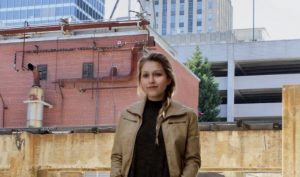
Writing has always been central to my identity. I come from a family of storytellers and literary enthusiasts. Before I myself could physically read or write, I spent long hours in the local library where my grandmother worked, fascinated by the infinite shelves of faded books after books. My mother read William Wordsworth to me before bed from a second-hand poetry book she purchased at a flea market, while my father expressed his love for my brothers and me through daily notes tucked into our lunch boxes. I therefore realized at an early age how powerful words can be.
I continued to chase that empowerment throughout school and into my personal life. My writing became part of who I am. Thus, when I nervously entered Wake Forest last fall, I hoped that my identity as a writer and a dedicated student would provide me the endurance necessary to withstand the pressures of a prestigious school. What I did not truly anticipate, and what my autoethnography featured here describes, was my identity crisis based upon factors that, unlike my writing or academic performance, were factors beyond my control. My first few months at Wake wrought much dissonance in my life as I maneuvered a hidden “culture shock” from the vast class differences between southern West Virginia and Wake Forest.
Professor Giovanelli’s writing seminar, centered on the theme of “home,” allowed me the perfect opportunity to explore my identity crisis through the power of words. I accomplished this through writing an autoethnography. Weaving elements from both my personal experiences and scholarly research, I was able to express the inner confusion I felt and apply it to the greater issue of class differences—namely, between the rural working-class and the educated upper-class—in American society. In this essay, many of my own questions about the validity of the ideal “American Dream” remain unanswered. I do not seek to provide any concrete solutions to the effects of class differences, nor do I suggest that my own experiences directly speak for others. Rather, I hope that this essay provides an honest, humble exploration of one young woman’s attempt to understand upward mobility and her struggle to belong.
From Professor Laura Giovanelli
Assignment
Click here for a pdf of Cassie’s assignment.
Professor Commentary
On her students, Cassie, Arisbeth, and Anonymous
There’s a consistent, urgent question my first-year writing students carry to class: “Am I allowed to use “I” in my writing?”
Well, I say, that depends. What are you trying to do with that writing? What’s your purpose and audience?
Even with that rhetorical framework, I understand their hesitation. Wake Forest students know the academic writing rules they learn in high school inside and out. At the top of the list: never, ever use first person. Writing about yourself can feel indulgent, overly based in emotion and individual experiences, just wrong. We squirm in our seats just thinking about it!
And yet.
Under the right circumstances, using your specific stories and lived experiences as a writer can be empowering. And combined with other kinds of evidence—academic studies, information from credible news sources, interviews— precise, thoughtful personal stories can be convincing evidence. As readers, we’ve all felt the power of a firsthand story, its power to move and change minds.
Although they are by no means the only example of how personal evidence can be used in academic writing, autoethnographies are a genre of writing where the very personal and the very academic collide in often productive, persuasive ways. In Exit Zero: Family and Class in Postindustrial Chicago, a book-length autoethnography my first-year students often read in preparation for writing their own autoethnographies, anthropologist Christine Walley advocates for personal narrative as evidence, arguing that they “are, of course, never just about individuals; such stories are also about the social worlds in which we live…telling personal stories means not only looking inward but also turning the self outward and tracing the links and relationships that shape and define not only who we are as individuals but also the broader social worlds of which we are a part.”
In my class, as we read Exit Zero together, we tease out the kinds of evidence Walley uses to tell the story and tensions of growing up in a working-class Chicago family in 1970s and 80s: family and historical documents, newspaper articles, photographs, interviews, seminal social sciences sources on class, and the current literature. And yes, personal stories, all synthesized together to make an argument about her complex and rich experience. Together, as novice writers working in this genre, we consider how we could borrow her writing tactics to make our own personal experiences matter more–to be more connected to a larger and relevant conversation about what it means to be a human in contrast to more abstract and dangerously hegemonic generalizations. “Stories are helpful because they are always told by someone and from somewhere,” Walley writes. I don’t think Walley means that every story has to relate with us as readers. Indeed, I think she’s cautioning us to avoid what novelist Chimamanda Ngozi Adichie calls “the danger of a single story.” In other words, our job as storytelling and narrative-loving humans is to listen to people who may be as different from us, especially stories of people traditionally living in the margins.
In writing that takes complicated identity issues like class, race, ethnicity, gender, and sexuality head on, these three student autoethnographies are strong examples of that purpose. These writers briefly survey social sciences literature to get a sense of the conversation about a social group they belong to, synthesizing those sources to present a picture of the current academic conversation. They then fold in their experiences through precise evidence. As readers, we’re taken on a journey of their thinking and discovery about their groups. And to me, that is the best kind of writing–writing that doesn’t have all the answers, but opens up possibilities to something new.
In Unraveling the Edges of Bisexuality: Reckoning with the Intricacies of Female Queerness Within Insider and Outsider Perspectives, the writer wrestles with her emerging identity as a young bisexual woman. She is the kind of writer and student who is never done. She revises, and revises again, and if we talked to her about her autoethnography today, she’d probably still want to revise. But that to me is a sign her thoughtfulness and maturity as a writer; we see her wrestle with her uncertainty even on the page. “I find myself in a middle ground between the very clearly defined groups of ‘gay’ and ‘straight often ambiguous about my feelings to the point where I don’t think I even fit into the category of ‘bisexual/queer,’ she writes “It doesn’t help that bisexuals tend to carry the labels ‘just lesbian and confused’ or ‘just straight and experimenting’ (Wandrey, Mosack, and Moore, 2015), thus defined by others as what we aren’t instead of what we are,” weaving her experience with a larger academic conversation about sexuality. As a writing teacher and a writer myself, I appreciate that honest struggle; She doesn’t have all the answers, but her emerging story helps point us–and her–toward more understanding.
Cassie Ball made contributing to a conversation about class her semester-long theme in our writing class. As a daughter of a working-class West Virginian family transitioning life as a first-year student to Wake Forest, an elite, private university, she saw “the Wake Bubble” with fresh, wide eyes, a change she explored from her earliest invention writing early in the semester and culminating in her autoethnography, our third and most complex major project. In You Can’t Go Home Again: The Autoethnography of a Young Woman Detached from Her Rural Appalachian Home, Cassie cites anthropologists Kenneth Guest and Max Weber, building intertextuality and relevance in her very personal argument. Here, Cassie connected on and off the page between our work and her other courses, particularly her cultural anthropology class. As a teacher, I relish seeing her synthesize those ideas because I know that’s more lasting learning. At the end of the semester, Cassie shared she wants to read and know more about class–like many strong students, she discovered a vein of curiosity and wanted to keep mining it even when her grade was in the books.
Like Cassie, Arisbeth Camillo-Reyes discovered a passion in writing about herself and her identity in ways that connected her life to the rest of the world; I remember when she asked me after a small group workshop over her draft if she could keep writing about the general theme of being a Mexican-American. She was excited–and I think, felt less alone–to discover immigration as a field of active research. It’s my hope that, even with this autoethnography and Writing 111 behind her, that she doesn’t stop. In “While Facing Trials and Succeeding: An Autoethnography of being a Female First-Generation Mexican American College Student,” Arisbeth writes openly about the specific pressures as a first-generation college student and Mexican-American woman–the push and pull between who she was and who she is becoming.
It takes a kind of bravery to do this writing, this personal, academic, something in-between mish-mash. It takes guts to wrestle with yourself and frame that against what academic studies may or may not say about these pieces of your identity, to be open to sharing that conclusion with the world.
Thank you to all three of these women. I hope your writing taught you as much as it taught me.