

 The Dark and Unbearable “Anything is Possible”
By Rosie Shields
WRI 111: Writing Seminar
To read student-editor Brandi Bangle’s comments on the writing moves found in this essay, click on or hover over the footnotes within the text.
On an October night in 2017, my mom’s dog-bark iPhone ringtone silences the table and creates an unfamiliar tension. She normally does not receive phone calls during dinner, let alone answer them, so my stomach begins to churn and I worry that something is wrong. I watch as she stands up, pushes in the wooden chair against the worn floor, and leaves the kitchen table to take the call. She hurries towards the dining room, to speak in private, with the phone pressed against her ear. Why right now during dinner is she taking this call? Panic spreads across my body. Is it an emergency? Who is calling her? 1 These details provide insight into Rosie’s family dynamics, allowing us to connect with her. Getting to know the family makes us care, which is important for her argument in the end. The details also descriptively set the scene, and the reader begins to feel that they are witnessing this moment right before their eyes.
I anxiously wait for her return as I glance down at the pan-fried chicken on my plate called “Fake-Veal,” my mom’s classic recipe, that she cooked for supper tonight. The aroma from the chicken comforts and calms me down for a second, bringing back nostalgia from my childhood. I stab my fork into a piece of the chicken making sure there is room for broccoli on it, so I can eat both in one bite. The burst of the soy sauce on the broccoli contrasting the spices from the chicken creates a delectable combination in my mouth. I look out the window, barely able to depict the field in the imminent dusk. 2 The deep dive into the meal serves as a distraction. We understand that she is trying to keep her mind off of the phone call by concentrating on the exact taste of the food.
Hearing my dad’s voice, I turn back to reality. My father, who sits across from me at the table, attempts to start a conversation to interrupt the silence, but I struggle to respond because I am too deep in my thoughts. My mom’s voice echoes from the dining room. I can feel the pain in her tone. Something must be wrong. I want to know what was happening that could make my mom, the most uplifting and positive person I know, sound so upset. 3 Another familial detail gives us context to help form a more complete picture of the family dynamic.
Minutes later, my mom returns and slowly approaches the kitchen table. She finally gains the courage to utter, “I have something to tell you both…It’s about your cousin Shaun. He passed away.” She was silent for a moment before gathering the strength to declare, “He was found in his bathroom. We aren’t sure what happened yet, but it’s possible that it might be related to drugs.” My heart drops. Fear, confusion, and horror electrify my whole body. My brows furrow. Sweat builds up on my back. My palms feel clammy. Is this real? I feel weak and am unable to think. No longer having an appetite, I push the fork aside to the edge of my plate. Mucus builds up in my throat, and I feel as though I have to vomit. I continue to swallow my saliva, hoping I will not regurgitate. 4 Instead of only using subjective words like “fear,” Rosie intentionally includes strong sensory descriptions which help relay her feelings to the reader. I have heard of drug-related deaths, but never did I think this would happen to someone I knew. How could this happen to Shaun, of all people?
At the time of his death, Shaun was 29. He lived in Charleston, after attending the College of Charleston, where his strong ambition and work ethic allowed him to work as an entrepreneur developing a new app in the food industry. He also was a thoughtful member of the community regularly volunteering at Big Brother Big Sister, a nonprofit organization that pairs children in the community with mentors, in hopes of offering the youth a sense of support, friendship, and guidance. Not only was he committed to his profession and his community but he was also deeply committed to his family. At family gatherings when I was young, I remember his liveliness as he lifted me on his shoulders giving me an exhilarating view from above. He was my cousin who was constantly on the dance floor at family weddings, encouraging others to join him. 5 After a more formal background on Shaun, this small memorable detail gives a glimpse of who Shaun was from a close, personal perspective. Shaun was famous for saying, “Anything is possible.”
Clearly, anything is possible. 6 Rosie uses Shaun’s phrase to smoothly transition into a paragraph with a much darker tone. Something as tragic as a drug-related death can happen to anyone. Why did Shaun have to suffer death now at such a young age? He already dealt with so much in his short life such as his car accident that occurred four years prior to his death. It was a December day in 2013. Shaun sat in the passenger seat of his friend’s pickup truck in Charleston as they were driving home from a night out in town. Both were intoxicated. His friend turned a corner so fast that the car first hit the curb and then hit a street sign, sending the truck rolling through a city park and into the air. The strong centrifugal force exerted at intense pressure, forcing the passenger door to fly open. Neither of them were wearing a seat belt. Shaun was thrown from the truck and was found up against a parking meter pole. The scene smelled of burnt rubber. And of sorrow. 7 Rosie uses a sensory description in short sentence and a sentence fragment to powerfully convey the scene. Neighbors nearby heard the wreckage and immediately called the ambulance. That night, Shaun was rushed to the hospital and underwent emergent surgery. He was found to be paralyzed from his neck down, but fortunately after surgery Shaun was able to gain back the sensation from his neck to his waist. His injury not only consisted of a broken back, but the doctor also discovered he had a partially severed spinal cord. At this time, it was unknown if Shaun would gain any more feeling or if his current condition would remain stable. Our family just had to sit back, wait, and pray that “Anything would be Possible.”
The emergency room doctor told Shaun that he would always be confined to a wheelchair, unable to walk ever again. He was told opioid pills could help alleviate some of his pain, but Shaun refused to take these pills because he was cognizant of the risks associated with their use and he was fearful of the danger of addiction. In fact, research has shown that those who use opioids can form an addiction in as little as five days (Shah et al.). As Shaun proceeded to recover without drugs, it not only took him time to modify his life due to his new pain, but it also took my family months to adjust to the severity of the situation. Shaun, the most outgoing and active person, was now confined to a wheelchair? How could this be? 8 These rhetorical questions express the difficult realities the family had to face after the accident. All we could do for now was to surround him with love and care. We were hopeful and confident everything would work out. And everything did work out, at least for a bit.
We watched Shaun work with fortitude to regain his mobility. He went to a spinal cord rehab center in Atlanta for 6 months. He sent uplifting videos to the family to update us on his progress as he moved from a wheelchair to a cane. At my cousin Bridget’s wedding, I witnessed Shaun dancing, partially supported by his cane, laughing and keeping pace. 9 This sentence, related to the earlier mention of Shaun at weddings, demonstrates the hopefulness the family felt during this time. From his determination, within a few years he built his muscles, allowing him to eventually walk a mile unassisted and swim two and a half miles. Despite his struggles, he overcame barriers and achieved the unimaginable. Shaun’s extraordinary transformation from an individual who was bound to a wheelchair for life to one who could walk a mile with no cane confirmed that miracles exist.
Just months after walking his first mile, he was found dead on his bathroom floor in Charleston. 10 “Just months” not only provides a transition, but it also helps us to understand the emotions experienced by the family, by putting into context how little time has passed. A needle and heroin lay beside him. The family learned this was the second time he tried heroin. We would soon learn that the heroin was laced with fentanyl, a powerful synthetic opioid which likely killed him instantly. Ten other people in Charleston that week who purchased heroin off the streets also died from the fentanyl in it. 11 This detail points to the greater problem in the community outside of this one narrative.
His death was completely unexpected to us. At the time of his death, he had candles burning and a huge meeting planned the next day for the app he created. Shaun was the type of person who never missed a meeting. His partner and co-worker, concerned about how Shaun did not pick up his phone and did not attend the meeting, went to his place the next day and saw him lying on the floor dead.
We are not sure exactly why he took heroin, 12 Rosie’s honesty shines through here, as she admits to not having all the answers–this is something we can relate to on a human level, especially if we’ve experienced a tragedy ourselves. whether it be due to pain or for other reasons, but we do know he used alcohol as a means to help him through both his physical pain of being paralyzed and his emotional pain due to adjusting to the drastic changes in his lifestyle. In the months that followed Shaun’s death during dinner on that dark October night, I began to realize that drug-related deaths, unfortunately, are not a unique tragedy. 13 Rosie uses her personal, unique experience to transition to the broader issue at hand, which, sadly, she learned is not so uncommon. Little did I know that 70,237 people died from drug-related overdoses that same year, and 47,600 of these deaths were from opioids (National Institute on Drug Abuse).
In order to comprehend the science behind why these 47,600 people lost their lives, it is essential to understand what exactly opioids are. Opioids are a drug found in the opium poppy plant that can harm human health when they bind to opioid receptors in one’s brain. It is important to note that opioids do not only include prescription pills from doctors but also, they include heroin, which can be injected into one’s bloodstream, and other synthetic narcotics such as fentanyl. When opioids bind to opioid receptors, they block pain signals sent from the brain to the body, prompting users to repeat drug exposure due to the relief. However, if misused, serious problems can ensue including hypoxia, a condition where breathing slows and a limited amount of oxygen is able to reach the brain. 14 This scientific information is presented in an easily digestible form so that the reader can learn details that are important to the issue overall. This can result in permanent brain damage, coma, or death (National Institute on Drug Abuse), as was the case for Shaun.
In many cases, people fall into the trap of obtaining opioids and becoming addicted to them as they are prescribed for minor pains. I can personally relate to this. On a cold March day in 2016 I sustained a lacrosse-related left knee dislocation and cartilaginous defect that required urgent surgery. 15 By going into her own personal anecdote in addition to her experience with Shaun, Rosie demonstrates that she is a worthy and appropriate writer to be discussing this particular subject. After undergoing surgery, the orthopedic surgeon immediately prescribed me Oxy-Contin, a type of opioid. My older sister Nellie picked up my prescription from the pharmacy in town, parked her Toyota Avalon in our garage, and walked inside with the prescription in hand. It was in a green bottle inside of a white small bag. I was sitting at the kitchen counter with my leg elevated on the chair next to me when she walked inside the door. 16 The specifics allow us to paint a picture of the scene in our head. My mother, a surgeon herself, upon seeing the medicine that Nellie brought home, was surprised and disappointed. She sat Nellie down at the seat to my left at the kitchen table before she proceeded to warn us to be cautious and promise to NEVER 17 The use of this word, plus the choice to write it in all caps, exemplifies just how strongly her mother felt about it. take these deadly drugs for pain relief. My mother disposed of the Oxy-Contin, placing the untouched bottle into the black trash bag in our kitchen. She instead handed me Motrin from the medicine cabinet, saying, “This is all you need for pain.” She was right. That was all I needed. Here, in my case, I did not need to take the opioid prescription. 18 Rosie uses short sentences to admit to her mother being right while also understanding this may not be true in all cases. Yes, I was dealing with severe pain, but it was clear that Motrin was a sufficient cure. I was lucky that I had my mother’s knowledge to advise me during my recovery, for if I lacked it, I too could have ended up like many people in the United States who fall into addiction.
Many people did not have a parent who warned them about the dangers of surgeons and dentists overprescribing opioids. According to a 2020 cross-sectional study that analyzed data from 2011 to 2015, between 25% to 50% of dental patients are overprescribed opioids (Suda et al. 473). Because this data was from years ago and because of the rapid increase of drug-related deaths that have occurred since, this number would be even higher today. In addition, the same study found that 53% of dental patients are prescribed opioids that exceed the recommended daily supply (Suda et al. 475). Part of the reason for the over-prescription of opioids could be due to American patients being intolerant or fearful of any pain or simply due to a lack of proper physician education.
This lack of proper education is evident with medical students applying for surgical residency, many of whom do not feel prepared to prescribe patients with opioids. This is true, especially seen in a 2019 study which proved that “while 91.4% felt their curriculum adequately covered opioid related adverse events, 34.4% felt adequately prepared to prescribe postoperative opioids to surgical patients” (Di Chiaro et al.). Similarly, 96.7% of the interviewed medical students studied opioid pharmacology during medical school, but 35.6% of them explained that “their curriculum did not include educational material on acute pain management” (Di Chiaro et al.). To think that these medical students are prescribing opioids, even though they misunderstand the basis of pharmacology and are uncertain about when to prescribe, is frightening. 19 After analyzing the research she has gathered, Rosie uses this information to make a conclusion concerning the current situation.
Due to the high number of people suffering from opioid addiction stemming from doctors’ overprescription, I propose that we must address the epidemic by encouraging patients to be more aware of risks and alternatives, introducing better training for doctors in medical school, requiring physicians to be more selective when prescribing, and introducing Narcan, a drug that can reverse the effects of opioids including heroin and fentanyl, into public spaces. 20 The essay turns prescriptive here, as Rosie uses her own experiences and data as the backbone for her proposals. In order to stimulate patient awareness, I would warn people to be wary before fully entrusting doctors with something that could cost their lives. For example, patients can ensure their safety by asking questions: Are opioids the best solution for my personal recovery, and are there alternatives? On the other hand, from a physician’s perspective, doctors must be more specific on when to prescribe narcotics including creating stricter guidelines for when to prescribe it and limiting it to small supplies of fewer than five days in order to help prevent addiction. 21 This essay maximizes its efficiency and reach, providing possible solutions for not only the everyday person, but also for physicians as well. This incorporates personal responsibility as well as institutional responsibility. Already, doctors are beginning to make progress, as seen in a March 2020 study that tested the effectiveness of an opioid misuse prevention program. This program consists of a short counseling session directly after dental surgery explaining the risks of opioids, providing instructions on how to safely use the drugs, and giving patients ibuprofen in addition to opioids to help decrease dependency. The results confirm that “a 10-minute intervention and provision of non-narcotic pain medications can reduce the amount of self-administered opioid medication following the dental surgery” (Derfinko). 22 Rosie proves her suggestions are viable.
Although there has been progress in limiting opioid overdose, our nation must take further steps to address the epidemic. We must be informed on the issue of drug use and opioid overprescription and be wary of doctors who are opioid promoters. We can address the epidemic by requiring that Narcan, which has an immediate effect, is put in first aid kits in private businesses and public buildings. Cities such as Elk Grove, California and Albuquerque, New Mexico already started to take such measures. For example, Elk Grove required that Narcan must be placed in first aid kits in twenty public locations in town including park district buildings, libraries, and the village hall. They even put these kits in schools and gave them to business owners to put in their offices. Likewise, city officials hosted training sessions for staff members at these locations to teach them how to properly administer the drug, even though it does not require expertise (Illinois Department of Human Services). 23 Giving explicit examples of cities that have adopted these measures with success makes their future implementation on a broad scale seem that much more possible. Even most bystanders are able to properly administer Narcan as seen in a study at the Michigan Delegation where “public-access naloxone kits found that bystanders in a simulated environment were willing to administer naloxone and 98% did so correctly” (Berg). In order to save more lives, it may be helpful for other cities to adopt this idea of placing public kits into their communities due to their proven success, their accessibility and their ease of use. 24 Here, Rosie presents us with her “so what” of the examples she discussed.
My experiences with my cousin, my own personal experience, and conversations with my mother opened my eyes to the larger opioid issue that takes the lives of thousands of people every year. Upon dislocating my patella and tearing my cartilage in a lacrosse-related injury, my mother warned me of the danger of opioids, the harm of overprescription, and the ease of becoming addicted. She told me that the usual American attitude towards pain is to take a pill, and explained to me that in some cases there are other ways to handle pain with non-narcotic alternatives like ice, elevation, and mind over matter. Her words stuck with me for the years to come. I now take her advice into consideration for any ache and pain, and I hope my mom’s advice can inspire those considering or dealing with drug use to do the same. I hope her words will open their eyes to the reality and dangers the epidemic presents. I hope her words will allow those considering drug use to see the harm opioids can impose on one’s body, the addiction it can lead to, and the pain it can present to both themselves and their families. 25 The repetition of “I hope her words will” show just how important Rosie’s mom’s advice was to her, and how important she hopes it will be to others. In addition to public nalaxone kits, something else that is easy to access is the knowledge of those around you. I hope my mother’s message, alongside Shaun’s famous saying that “anything is possible” bring about change. Having a cousin directly affected by opioids led me to gain awareness of how real and relevant the opioid epidemic is. I hope Shaun’s story will help others gain the same awareness and help them take preventive measures early on to ensure they do not experience an accident as tragic as his. 26 Again, Rosie’s experience with Shaun has been vital to her understanding of the opioid epidemic. Here she expresses her hopes that it will impact others in a similar and positive way.
Implementing certain solutions can help create a safer environment and prevent you from suffering the way I did when I heard about Shaun’s death. It could prevent you from losing your incredibly inspirational cousin in an instant. In the blink of an eye, anything is possible: you too could suddenly shift from feeling immense pain that you cannot handle to lying dead on the floor, feeling nothing at all. Shaun lost his life in 2017, along with 47,600 others that same year. 27 The use of Shaun’s phrase “anything is possible” wraps up the essay in a hard-hitting way. Anything is possible includes the negative–which is exactly why we must act on this issue. We must intervene now, so no further lives are lost.
Works Cited
Berg, Sara. “Lifesaving Naloxone Should Be Available Almost Everywhere.” American Medical Association, June 11, 2019. https://www.ama-assn.org/delivering-care/opioids/lifesaving-naloxone-should-be-available-almost-everywhere.
Derfinko, Karen J., Salgado García, Francisco I., Johnson, Karen C., Hand, Sarah, McDevitt-Murphy, Meghan, Murphy, James J., Suda, Katie J., et al. “A Randomized Pilot Program to Reduce Opioid Use Following Dental Surgery and Increase Safe Medication Return.” Addictive Behaviors 102 (March 2020). https://doi.org/10.1016/j.addbeh.2019.106190.
Di Chiaro, Bianca, Patrick J. Sweigert, Purvi P. Patel, and Adam S. Kabaker. “Many Medical Students Applying for Surgical Residency Feel Inadequately Prepared to Prescribe Post-Operative Opioids.” The American Journal of Surgery 219, no. 3 (March 2020): 411–14. https://doi.org/10.1016/j.amjsurg.2019.10.024.
Illinois Department of Human Services. “3 American Cities Where Narcan Is Publicly Available,” n.d. https://www.dhs.state.il.us/OneNetLibrary/27896/documents/2018OAC/Three_American_Cities_where_NARCAN_is_publicly_available.pdf.
National Institute on Drug Abuse. “Overdose Death Rates,” March 2020. https://www.drugabuse.gov/related-topics/trends-statistics/overdose-death-rates
National Institute on Drug Abuse. “Prescription Opioids,” June 2019. https://www.drugabuse.gov/publications/drugfacts/prescription-opioids.
Shah A, Hayes CJ, Martin BC. Characteristics of Initial Prescription Episodes and Likelihood of Long-Term Opioid Use — United States, 2006–2015. MMWR Morb Mortal Wkly Rep 2017;66:265–269. DOI: http://dx.doi.org/10.15585/mmwr.mm6610a1
Suda, Katie J., Jifang Zhou, Susan A. Rowan, Jessina C. McGregor, Rosanne I. Perez, Charlesnika T. Evans, Walid F. Gellad, and Gregory S. Calip. “Overprescribing of Opioids to Adults by Dentists in the U.S., 2011–2015.” American Journal of Preventive Medicine 58, no. 4 (April 2020): 473–86. https://doi.org/10.1016/j.amepre.2019.11.006.
A Word from Rosie
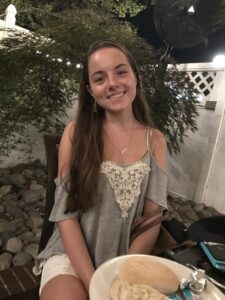 Pain, horror, and shock. These are the feelings I felt upon hearing of my cousin’s death. While writing the essay, the shock and the confusion continued to come back to me. The feelings of how unreal this whole situation was clouded up my mind, leaving no escape. The pain stung as each word was written down, as each sentence and paragraph were formed. Finally, gaining the courage to write a complete, cohesive essay made Shaun’s situation seem a reality. It brought closure and hope. It brought closure and hope. Through informing and educating people on Shaun’s story, it brought hope that we can prevent others from experiencing similar situations. It brought hope for inspiring us to take earlier action and establishing preventive measures to ensure this doesn’t happen to others in the future. It brought hope that anything is possible, that we can work together to solve the opioid epidemic.
Throughout the writing and editing process, I wanted to convey my cousin’s story as accurately as possible, so I made sure to have several phone calls with his parents to confirm that every detail was correct. Meanwhile, I still wanted to be mindful of my word choice as many other families are dealing with the same difficulties. Although balancing these tasks was tough to manage, what got me through it was Shaun’s message that, “Anything is Possible.” His positive spirit and love guided me throughout the process, and I could not have done it without him.
The opioid epidemic is an important topic in my life. Not only did Shaun suffer from the epidemic but several other people from my hometown have as well. It is likely that many of you reading this know people who went through similar difficulties too. I hope that this essay can serve as a tool to bring people together, to know they are not alone, and to create change. We must work together as a community to end the opioid epidemic and support those suffering, including both the victims of drug-related problems and their families. If we work together, as anything is truly possible.
From Professor Elisabeth Whitehead
Commentary
I’m deeply grateful to Rosie for sharing her experience with us through her powerful writing. She honors the life of her cousin Shaun and compassionately shares her family’s experience for the good of her readers. As she says directly towards the end of the essay, “I hope Shaun’s story will help others gain the same awareness and help them take preventive measures early on to ensure they do not experience an accident as tragic as his.” This is felt strongly throughout the essay as Rosie seamlessly integrates research with her narrative. We have the statistics, the studies, specific recommendations for affecting change, but we never lose her story, her voice. Her narrative choices, such as the use of the present tense, establishing presence with the immediacy of her details, and perhaps most importantly, the strength and vulnerability of her voice, help to reduce the distance between writer and reader. As a result, Rosie’s essay feels cohesive and focused, allowing us to connect the research with real life, humanizing an urgent issue.
Something that the reader cannot see here is the amount of effort Rosie dedicated to her revision process. The version of this essay she submitted in class was powerful, well researched and precise. In it, she followed various roads of thought and research, honoring the issue’s complexities, finding depth and her own voice as a writer. After her essay had been accepted for publication, and then after speaking with her family, she realized that she had been missing some pivotal information when she wrote the first version of the essay, information that would have changed the initial approach. When working on her revisions it was not a simple matter of clarification or changing a single sentence or a paragraph. Instead, it required a re-envisioning of the essay, in terms of finding its new center and structure. She was committed to this process, to telling her experience as precisely, openly, and with as much care as possible. It is a gift to her readers, with an intention to connect, inform, and move us towards action.
Assignment
Essay 4: Narrative Advocacy
For your fourth paper, develop an argument built on the foundation of personal narrative on an issue of concern to you.
Narrative arguments make it possible for writers to illustrate a point by appealing to their audience, invoking experience, and creating a sense of identification with the controversy at hand. Key to creating an effective narrative argument is establishing credibility (your audience must believe you and trust your presentation) and establishing representativeness (the audience needs to understand that your narrative reflects a larger problem beyond the scope of its events).
Choose a subject that is tightly focused. You will want to keep your work balanced rhetorically by accompanying the emotional appeal of your story with strong credibility and with logical evidence (both anecdotal and researched) to support your claims.
Think in terms of an experience that made you realize that something was wrong or that something needed to be changed, and from which you gained essential knowledge about yourself and about the workings of the world around you. Tell a story that allows you to establish your position on the controversy and provide support for your claims. A well-told story often engages in vivid description. Create presence in your details. Your readers should really feel that they too, by reading your account, are there beside you, and can hear, see, smell, and touch those surroundings. Clean and vivid details can help set scene and tone. Therefore, be specific, descriptive, and engaging.
Successful papers will provide a rhetorically balanced narrative argument and will be clearly and engagingly written. You should conduct enough research to provide relevant, external support for your position. Your paper should include at least three sources (books, magazines, journals, newspapers, interviews, films, and/or texts from the academic databases), but use as many sources as you need.
Editor Comments
- 1These details provide insight into Rosie’s family dynamics, allowing us to connect with her. Getting to know the family makes us care, which is important for her argument in the end. The details also descriptively set the scene, and the reader begins to feel that they are witnessing this moment right before their eyes. ↩︎
- 2The deep dive into the meal serves as a distraction. We understand that she is trying to keep her mind off of the phone call by concentrating on the exact taste of the food. ↩︎
- 3Another familial detail gives us context to help form a more complete picture of the family dynamic. ↩︎
- 4Instead of only using subjective words like “fear,” Rosie intentionally includes strong sensory descriptions which help relay her feelings to the reader. ↩︎
- 5After a more formal background on Shaun, this small memorable detail gives a glimpse of who Shaun was from a close, personal perspective. ↩︎
- 6Rosie uses Shaun’s phrase to smoothly transition into a paragraph with a much darker tone. ↩︎
- 7Rosie uses a sensory description in short sentence and a sentence fragment to powerfully convey the scene. ↩︎
- 8These rhetorical questions express the difficult realities the family had to face after the accident. ↩︎
- 9This sentence, related to the earlier mention of Shaun at weddings, demonstrates the hopefulness the family felt during this time. ↩︎
- 10“Just months” not only provides a transition, but it also helps us to understand the emotions experienced by the family, by putting into context how little time has passed. ↩︎
- 11This detail points to the greater problem in the community outside of this one narrative. ↩︎
- 12Rosie’s honesty shines through here, as she admits to not having all the answers–this is something we can relate to on a human level, especially if we’ve experienced a tragedy ourselves. ↩︎
- 13Rosie uses her personal, unique experience to transition to the broader issue at hand, which, sadly, she learned is not so uncommon. ↩︎
- 14This scientific information is presented in an easily digestible form so that the reader can learn details that are important to the issue overall. ↩︎
- 15By going into her own personal anecdote in addition to her experience with Shaun, Rosie demonstrates that she is a worthy and appropriate writer to be discussing this particular subject. ↩︎
- 16The specifics allow us to paint a picture of the scene in our head. ↩︎
- 17The use of this word, plus the choice to write it in all caps, exemplifies just how strongly her mother felt about it. ↩︎
- 18Rosie uses short sentences to admit to her mother being right while also understanding this may not be true in all cases. ↩︎
- 19After analyzing the research she has gathered, Rosie uses this information to make a conclusion concerning the current situation. ↩︎
- 20The essay turns prescriptive here, as Rosie uses her own experiences and data as the backbone for her proposals. ↩︎
- 21This essay maximizes its efficiency and reach, providing possible solutions for not only the everyday person, but also for physicians as well. This incorporates personal responsibility as well as institutional responsibility. ↩︎
- 22Rosie proves her suggestions are viable. ↩︎
- 23Giving explicit examples of cities that have adopted these measures with success makes their future implementation on a broad scale seem that much more possible. ↩︎
- 24Here, Rosie presents us with her “so what” of the examples she discussed. ↩︎
- 25The repetition of “I hope her words will” show just how important Rosie’s mom’s advice was to her, and how important she hopes it will be to others. ↩︎
- 26Again, Rosie’s experience with Shaun has been vital to her understanding of the opioid epidemic. Here she expresses her hopes that it will impact others in a similar and positive way. ↩︎
- 27The use of Shaun’s phrase “anything is possible” wraps up the essay in a hard-hitting way. Anything is possible includes the negative–which is exactly why we must act on this issue. ↩︎